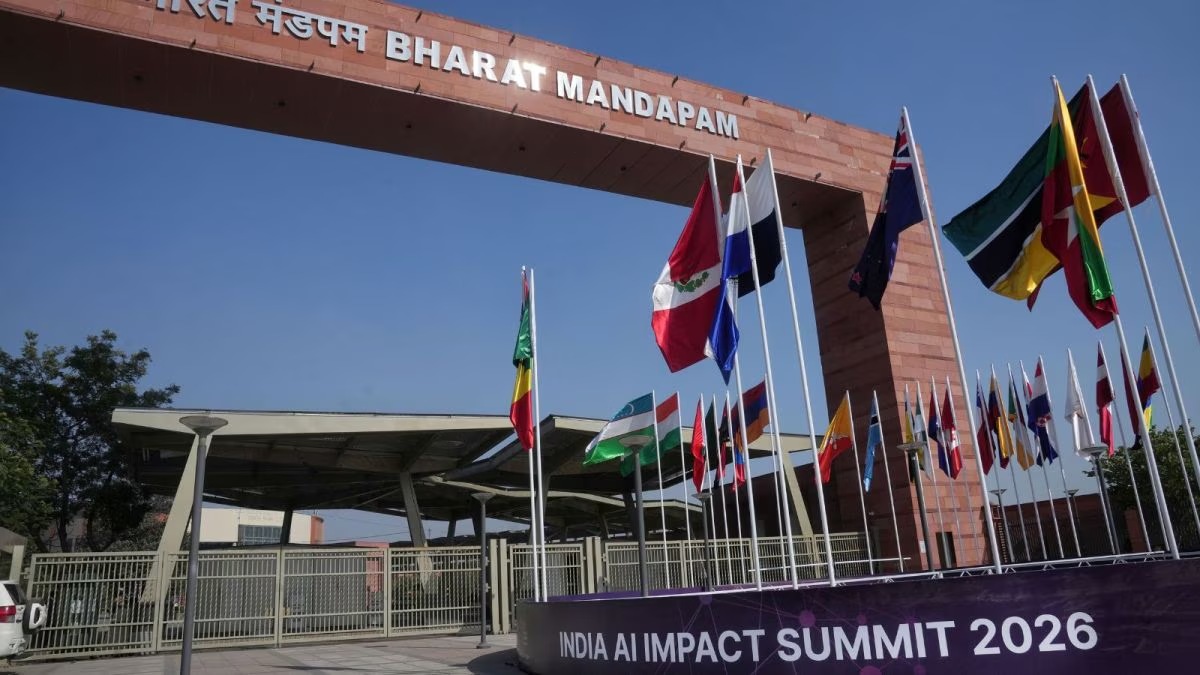
The Delhi AI Impact Summit placed India at the center of the global artificial intelligence debate. Delegations from more than sixty nations arrived in New Delhi. Technology executives, policymakers, researchers, startup founders filled the halls of Bharat Mandapam. Agenda focused on governance, infrastructure, innovation, digital inclusion.
India presented ambition. India projected confidence. India framed summit as platform to rebalance global AI power structures long dominated by executives from Google, Microsoft, OpenAI, Meta.
India’s Strategic Position
Government representatives promoted concept of a “global AI commons.” Vision centered on shared datasets, multilingual models, affordable compute access for developing nations. Proposal targeted concentration of AI capabilities inside a handful of Western corporations.
Policy direction aligned with broader digital sovereignty goals previously visible in initiatives such as Digital India and semiconductor expansion plans. Summit messaging reinforced narrative of technological self-reliance.
Regulatory tone strengthened. Officials stated global platforms must operate under Indian constitutional principles. Data localization, content moderation standards, algorithmic accountability received emphasis. Signal clear: platform power faces national oversight.
Infrastructure Push
India announced expansion of GPU capacity across public research institutions. Plan included tens of thousands of high-performance units within months. Objective involved reducing dependence on foreign cloud ecosystems.
Data center investments projected to reach hundreds of billions of dollars. Domestic compute capacity considered foundation for independent model training. Public-private partnerships formed core of funding structure.
Comparison inevitable with large-scale AI clusters operated by Nvidia, hyperscale cloud networks controlled by American firms. India’s approach prioritized distributed access across universities, startups, government labs.
Global South Leadership Narrative
Summit messaging highlighted inequality in AI development. Many developing nations lack language datasets, compute infrastructure, policy frameworks. India positioned itself as bridge between advanced economies and emerging markets.
Diplomatic outreach extended toward Africa, Southeast Asia, Latin America. Collaborative research agreements proposed. Multilingual AI tools showcased. Focus on agriculture analytics, public health diagnostics, education platforms.
Framing shifted debate from corporate dominance toward developmental equity. Moral authority narrative strengthened India’s diplomatic leverage.