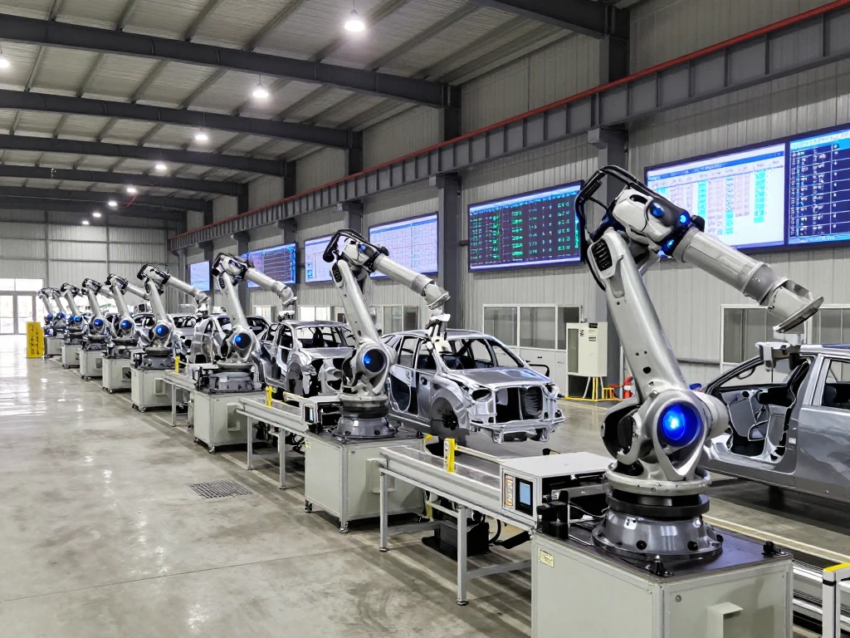
Robotics and Automation are transforming the way industries operate, businesses grow, and people live. From manufacturing plants and healthcare facilities to smart homes and autonomous vehicles, these advanced technologies are improving efficiency, reducing costs, and increasing productivity. As Artificial Intelligence (AI), Machine Learning (ML), and the Internet of Things (IoT) continue to evolve, robotics and automation are becoming more intelligent and capable than ever before.
Today, organizations across the world are investing in robotic systems to perform repetitive tasks, improve workplace safety, and deliver higher-quality products and services. Automation is no longer limited to factories—it is now used in agriculture, logistics, retail, healthcare, finance, and even education.
In this article, we will explore what robotics and automation are, how they work, their key technologies, real-world applications, benefits, challenges, and future trends shaping the next generation of intelligent systems.
What Are Robotics and Automation?
Robotics is the branch of technology that focuses on designing, building, and programming robots capable of performing physical tasks. These robots can work independently or alongside humans to complete activities that may be repetitive, dangerous, or require high precision.
Automation refers to the use of technology, software, and control systems to perform tasks with minimal human intervention. Automation can involve robots, computer systems, sensors, and artificial intelligence to streamline operations and improve efficiency.
Although robotics and automation are closely related, they are not the same. Automation can exist without robots—for example, automated software that processes online payments. Similarly, robots may require automation systems to perform tasks efficiently.
Together, robotics and automation are driving digital transformation across industries worldwide.
How Robotics and Automation Work
Modern robotic systems combine hardware and software to perform complex tasks accurately.
Sensors
Sensors collect information about the surrounding environment, including distance, temperature, pressure, movement, and object position.
Controllers
Controllers act as the robot’s brain, processing data from sensors and making decisions based on programmed instructions.
Actuators
Actuators convert digital commands into physical movement, allowing robots to lift, rotate, assemble, or transport objects.
Artificial Intelligence
AI enables robots to recognize patterns, learn from experience, and make intelligent decisions without constant human guidance.
Machine Learning
Machine Learning improves robotic performance over time by analyzing data and optimizing actions.
Key Technologies Behind Robotics and Automation
Several advanced technologies support modern robotic systems.
Artificial Intelligence (AI)
AI allows robots to analyze information, solve problems, and adapt to changing environments.
Machine Learning (ML)
Machine Learning enables robots to improve their performance by learning from data instead of relying solely on predefined rules.
Computer Vision
Computer Vision helps robots identify objects, recognize faces, inspect products, and navigate their surroundings using cameras and image analysis.
Internet of Things (IoT)
IoT connects robots with sensors, machines, and cloud platforms for real-time communication and monitoring.
Cloud Computing
Cloud platforms provide robots with powerful computing resources, data storage, and remote management capabilities.
Real-World Applications of Robotics and Automation
Robotics and automation are improving operations across multiple industries.
1. Manufacturing
Manufacturing remains one of the largest users of industrial robots.
Robots perform tasks such as:
- Welding
- Painting
- Assembly
- Packaging
- Quality inspection
- Material handling
Automated production lines increase speed, reduce errors, and improve product consistency while lowering operational costs.
2. Healthcare
Healthcare organizations use robotics to improve patient care and medical procedures.
Applications include:
- Robotic-assisted surgery
- Pharmacy automation
- Medical imaging
- Hospital delivery robots
- Rehabilitation robots
- Patient monitoring
Surgical robots help doctors perform minimally invasive procedures with greater precision and shorter recovery times.
3. Logistics and Warehousing
Warehouses increasingly rely on robotics for inventory management and order fulfillment.
Robotic systems perform tasks such as:
- Picking products
- Sorting packages
- Loading shipments
- Inventory tracking
- Automated storage
These technologies improve delivery speed while reducing manual labor.
4. Agriculture
Modern farming has become more efficient through automation.
Agricultural robots help with:
- Planting crops
- Harvesting fruits
- Weed control
- Soil monitoring
- Precision irrigation
- Livestock management
Farmers use drones and autonomous machines to monitor large fields and increase crop yields.
5. Retail and E-Commerce
Retail businesses use robotics and automation to improve customer experiences.
Examples include:
- Automated checkout systems
- Inventory management
- Warehouse robots
- Customer service robots
- Smart shelves
These solutions help businesses reduce costs while improving operational efficiency.
6. Transportation
Automation is transforming transportation through autonomous vehicles and intelligent traffic systems.
Applications include:
- Self-driving cars
- Autonomous trucks
- Delivery robots
- Driver assistance systems
- Smart traffic management
These technologies aim to improve road safety and reduce transportation costs.
7. Construction
Construction companies are adopting robotic systems for safer and faster project execution.
Robots assist with:
- Bricklaying
- Concrete printing
- Site inspections
- Material transportation
- Structural monitoring
Automation helps improve construction quality while reducing workplace accidents.
8. Hospitality
Hotels and restaurants are increasingly using robots for customer service.
Examples include:
- Robot receptionists
- Automated food delivery
- Cleaning robots
- Room service robots
These innovations enhance customer satisfaction while supporting staff during busy periods.
9. Security and Defense
Robotic technologies improve safety and surveillance in security operations.
Applications include:
- Bomb disposal
- Border surveillance
- Autonomous drones
- Search and rescue
- Disaster response
Robots can safely operate in environments that may be hazardous for humans.
10. Smart Homes
Home automation systems make daily living more convenient.
Examples include:
- Robotic vacuum cleaners
- Smart lighting
- Automated climate control
- Voice assistants
- Smart security cameras
These systems improve energy efficiency and home security while offering greater convenience.
Benefits of Robotics and Automation
Organizations adopt robotics and automation because of their many advantages.
Increased Productivity
Robots can work continuously without fatigue, significantly increasing production output.
Improved Accuracy
Automated systems perform repetitive tasks with exceptional precision, reducing human error.
Enhanced Workplace Safety
Robots can handle hazardous tasks, protecting workers from dangerous environments.
Cost Savings
Although initial investments may be high, automation lowers long-term labor and operational costs.
Better Product Quality
Consistent robotic performance improves product quality and reduces manufacturing defects.
Faster Operations
Automation accelerates production processes, enabling businesses to meet customer demands more efficiently.
24/7 Operations
Unlike human workers, robots can operate around the clock with minimal downtime.
Challenges of Robotics and Automation
Despite their advantages, robotics and automation also present several challenges.
High Initial Investment
Implementing robotic systems often requires significant capital for equipment, installation, and training.
Workforce Adaptation
Automation may change job roles, requiring employees to learn new technical skills.
Maintenance Requirements
Robotic systems require regular maintenance, software updates, and technical support to ensure reliable performance.
Cybersecurity Risks
Connected robotic systems may be vulnerable to cyberattacks if security measures are inadequate.
Limited Flexibility
Some robots are designed for specific tasks and may require reprogramming for new applications.
Future Trends in Robotics and Automation
The future of robotics and automation is evolving rapidly as emerging technologies become more advanced.
AI-Powered Robots
Artificial Intelligence will enable robots to make smarter decisions, adapt to new situations, and collaborate more effectively with humans.
Collaborative Robots (Cobots)
Cobots are designed to work safely alongside people rather than replacing them. They are becoming increasingly popular in manufacturing, healthcare, and logistics.
Autonomous Mobile Robots
Autonomous mobile robots will play a larger role in warehouses, hospitals, airports, and retail environments by transporting goods and assisting with daily operations.
Edge Computing
Processing data closer to the robot will reduce delays and improve real-time decision-making.
Digital Twins
Digital twin technology creates virtual models of robots and production systems, allowing businesses to test processes before implementing them in the real world.
Human-Robot Collaboration
Future workplaces will focus on collaboration between skilled employees and intelligent robots to improve efficiency and innovation.
Sustainable Automation
Businesses are investing in energy-efficient robots and environmentally friendly manufacturing practices to reduce their environmental impact.
Best Practices for Implementing Robotics and Automation
Organizations planning to adopt robotics and automation should consider the following best practices:
- Identify repetitive tasks that provide the greatest return on investment.
- Choose scalable automation solutions that support future growth.
- Provide employees with training to work effectively alongside robotic systems.
- Prioritize cybersecurity to protect connected devices and sensitive data.
- Perform regular maintenance to ensure reliable system performance.
- Continuously monitor and improve automated processes using performance data.
These practices help organizations maximize productivity while minimizing risks.
Conclusion
Robotics and Automation are reshaping industries by improving productivity, enhancing safety, reducing operational costs, and enabling businesses to deliver higher-quality products and services. From manufacturing and healthcare to agriculture, logistics, retail, and smart homes, these technologies have become essential tools for innovation and growth.
Although challenges such as implementation costs, cybersecurity concerns, and workforce adaptation remain, continued advancements in Artificial Intelligence, Machine Learning, Computer Vision, and the Internet of Things are making robotic systems smarter, more flexible, and more accessible.
As organizations continue to embrace digital transformation, robotics and automation will play an even greater role in building efficient, sustainable, and intelligent workplaces. Businesses that invest in these technologies today will be better prepared to compete in the rapidly evolving global economy and unlock new opportunities for long-term success.