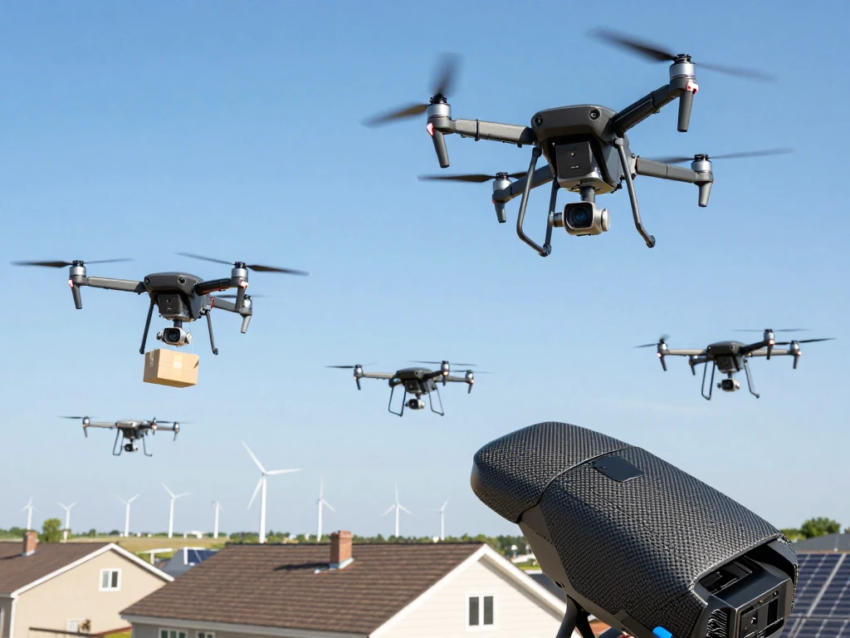
Drones have rapidly evolved from military tools into powerful devices used across industries like photography, agriculture, delivery services, construction, and security. Today, drones technology is transforming how we capture data, monitor environments, and perform tasks that were once difficult, dangerous, or expensive.
In this article, we will explore how drones technology works, its key components, types of drones, and modern applications, along with its benefits and future potential.
What Is Drones Technology?
Drones technology refers to the design, development, and use of unmanned aerial vehicles (UAVs) that can fly without a human pilot onboard. These drones are either controlled remotely or operate autonomously using software and sensors.
Modern drones are equipped with advanced systems such as:
- GPS navigation
- Cameras and sensors
- Artificial intelligence
- Wireless communication systems
These features allow drones to perform complex tasks with high accuracy and efficiency.
How Drones Technology Works
Drones work using a combination of hardware, software, and communication systems. Let’s break it down step by step:
1. Flight Control System
At the heart of every drone is a flight controller. This acts as the brain of the drone and processes all inputs from the user or automated system. It stabilizes the drone and controls its movement in real time.
2. Motors and Propellers
Most drones use multiple brushless motors and propellers to generate lift. By adjusting the speed of each motor, the drone can:
- Take off
- Hover in place
- Move forward, backward, or sideways
- Rotate in the air
3. Sensors and GPS
Drones are equipped with various sensors such as:
- Accelerometers (measure movement)
- Gyroscopes (maintain balance)
- Altimeters (measure height)
- GPS modules (track location)
These sensors help drones maintain stability and follow accurate flight paths.
4. Remote Control or Autonomous System
Drones can be operated in two ways:
- Manual Control: Using a remote controller or mobile app
- Autonomous Flight: Following pre-programmed routes using AI and GPS
Autonomous drones are especially useful in mapping, surveillance, and delivery systems.
5. Camera and Data Transmission
Many drones come with high-definition cameras that capture photos and videos from the sky. The data is transmitted in real time to the operator through wireless signals.
This feature is widely used in photography, filmmaking, and inspections.
Types of Drones Technology
There are different types of drones designed for specific purposes:
1. Consumer Drones
Used for personal photography, recreation, and social media content creation.
2. Commercial Drones
Used in industries like agriculture, construction, and real estate.
3. Military Drones
Used for surveillance, reconnaissance, and defense operations.
4. Delivery Drones
Designed to transport packages and goods quickly over short distances.
5. Racing Drones
Built for speed and agility, mainly used in drone racing competitions.
Modern Applications of Drones Technology
Drones technology is now used in many industries. Here are the most important applications:
1. Aerial Photography and Videography
One of the most popular uses of drones is in photography and filmmaking. Drones capture stunning aerial shots that were once only possible with helicopters.
They are widely used in:
- Movies and TV production
- Wedding photography
- Travel vlogging
- Real estate marketing
2. Agriculture
In agriculture, drones are revolutionizing farming practices. They help farmers:
- Monitor crop health
- Spray pesticides and fertilizers
- Analyze soil conditions
- Increase crop yield
This technology is known as precision farming, which improves efficiency and reduces waste.
3. Delivery Services
Companies are now using drones for fast and efficient delivery of packages, food, and medical supplies. Drone delivery reduces delivery time and transportation costs.
It is especially useful in remote or hard-to-reach areas.
4. Construction and Infrastructure
In construction, drones are used for:
- Site inspection
- Mapping and surveying land
- Monitoring project progress
- Ensuring worker safety
They provide accurate data that helps engineers make better decisions.
5. Security and Surveillance
Drones play an important role in security systems. They are used by:
- Police departments
- Border control agencies
- Private security companies
Drones provide real-time aerial surveillance, helping monitor large areas efficiently.
6. Disaster Management
During natural disasters like floods, earthquakes, or fires, drones help:
- Search for survivors
- Assess damage
- Deliver emergency supplies
- Monitor affected areas
They are extremely useful in dangerous environments where human access is limited.
7. Environmental Monitoring
Drones are used to study the environment and protect wildlife. They help in:
- Tracking animal movements
- Monitoring forests
- Detecting pollution
- Studying climate change effects
Benefits of Drones Technology
Drones technology offers several advantages:
1. Cost-Effective
Drones reduce the need for expensive equipment like helicopters.
2. Time-Saving
They complete tasks quickly, especially in surveying and delivery.
3. High Accuracy
Drones provide precise data for mapping and analysis.
4. Safety Improvement
They can perform dangerous tasks without risking human life.
5. Easy Accessibility
Drones can reach areas that are difficult or impossible for humans.
Challenges of Drones Technology
Despite its benefits, drones also face some challenges:
1. Privacy Concerns
Drones with cameras may raise privacy issues.
2. Limited Battery Life
Most drones can only fly for 20–40 minutes per charge.
3. Regulations
Many countries have strict rules for drone usage.
4. Weather Limitations
Strong winds and rain can affect drone performance.
Future of Drones Technology
The future of drones is extremely promising. With advancements in AI, 5G, and automation, drones will become even more intelligent and efficient.
In the future, we may see:
- Fully autonomous delivery systems
- AI-powered surveillance drones
- Drone taxis for passengers
- Improved battery technology
- Smarter agriculture solutions
Companies around the world are investing heavily in drone innovation, making it one of the most important technologies of the future.
Conclusion
Drones technology is transforming industries and everyday life with its wide range of applications. From photography and agriculture to delivery and disaster management, drones are making tasks faster, safer, and more efficient.
As technology continues to evolve, drones will become even more advanced and integrated into our daily lives. Whether for personal use or industrial applications, drones are truly shaping the future of modern technology.