In the world of digital finance, crypto mining plays a crucial role in keeping blockchain networks secure, functional, and decentralized. As cryptocurrencies like Bitcoin continue to grow in popularity, mining has become an essential process that validates transactions and introduces new coins into circulation.
Many people think crypto mining is just about earning money through powerful computers, but in reality, it is a complex technical process that ensures the integrity of blockchain systems. Without mining, cryptocurrencies would not be able to function securely or transparently.
In this article, we will explore what crypto mining is, how it works, its importance in blockchain validation, types of mining, required hardware, benefits, challenges, and future trends.
What Is Crypto Mining?
Crypto mining is the process of validating and recording cryptocurrency transactions on a blockchain network. It involves solving complex mathematical problems using computer power to verify transactions and add them to a distributed ledger.
Miners are participants in the network who use specialized hardware and software to compete in solving these cryptographic puzzles. Once a problem is solved, the miner adds a new block of transactions to the blockchain and receives a reward in the form of cryptocurrency.
This process is essential for maintaining trust, security, and decentralization in digital currencies.
How Crypto Mining Works
Crypto mining operates through a combination of cryptography, computational power, and blockchain technology.
1. Transaction Collection
When users send cryptocurrency, transactions are grouped together into a block waiting to be verified.
2. Solving Mathematical Problems
Miners compete to solve complex cryptographic puzzles using powerful computers. This process requires significant computational power.
3. Proof of Work
Most mining systems, especially Bitcoin, use a mechanism called Proof of Work (PoW). This ensures that miners must prove they have spent computational effort before adding a block.
4. Block Verification
Once a miner solves the puzzle, other nodes in the network verify the solution.
5. Reward Distribution
The successful miner receives a reward, usually in the form of newly created coins and transaction fees.
This entire process ensures that the blockchain remains secure and tamper-proof.
Importance of Crypto Mining in Blockchain Validation
Crypto mining is not just about earning rewards—it is essential for blockchain integrity.
1. Transaction Verification
Mining ensures that all transactions are legitimate and prevents double spending.
2. Network Security
The computational effort required makes it extremely difficult for hackers to alter blockchain data.
3. Decentralization
Mining removes the need for central authorities like banks, keeping control distributed across the network.
4. Creation of New Coins
Mining is the process through which new cryptocurrency units are introduced into circulation.
Without mining, blockchain networks would not be secure or functional.
Types of Crypto Mining
There are several methods of crypto mining, each with different requirements and efficiency levels.
1. CPU Mining
This method uses a computer’s central processing unit (CPU). It is simple but inefficient for large-scale mining.
2. GPU Mining
Graphics Processing Units (GPUs) are more powerful and commonly used for mining many cryptocurrencies.
3. ASIC Mining
Application-Specific Integrated Circuits (ASICs) are highly specialized machines designed for mining specific cryptocurrencies like Bitcoin.
4. Cloud Mining
Cloud mining allows users to rent mining power from remote data centers instead of using their own hardware.
5. Mining Pools
Mining pools combine the computing power of multiple miners to increase the chances of earning rewards, which are then shared among participants.
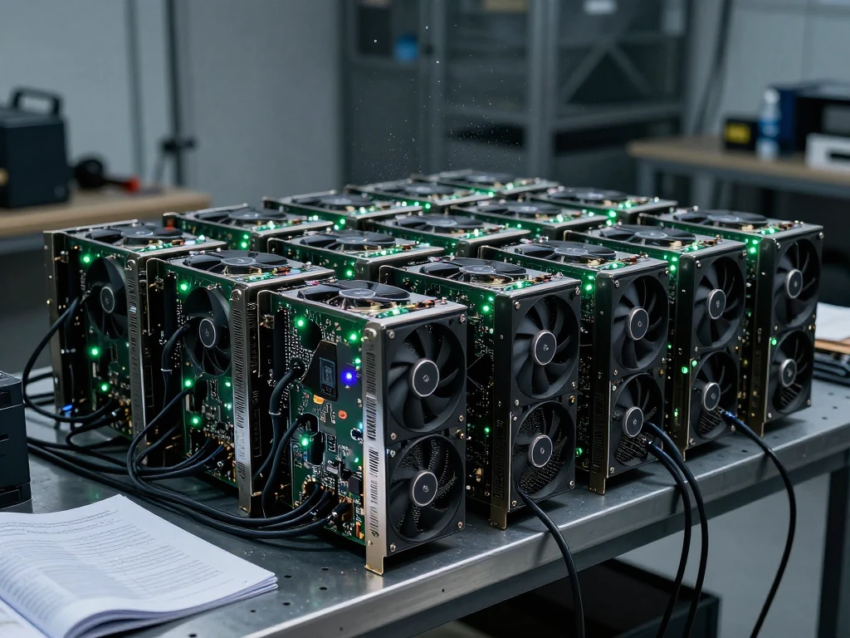
Hardware Used in Crypto Mining
Mining requires specialized hardware depending on the cryptocurrency and mining method.
- High-performance GPUs
- ASIC mining machines
- Cooling systems to prevent overheating
- Power supply units for continuous operation
- Mining rigs (multi-GPU setups)
Efficient hardware is essential because mining consumes a large amount of electricity and processing power.
Energy Consumption and Environmental Concerns
One of the biggest criticisms of crypto mining is its high energy consumption. Mining operations, especially those using Proof of Work systems, require significant electricity.
This has raised environmental concerns due to carbon emissions from power generation. As a result, many companies are exploring greener alternatives such as renewable energy and more efficient consensus mechanisms like Proof of Stake (PoS).
Cryptocurrencies like Ethereum have already moved toward more energy-efficient systems to reduce environmental impact.
Benefits of Crypto Mining
Despite its challenges, crypto mining offers several advantages.
1. Network Security
Mining ensures that blockchain networks remain secure and resistant to attacks.
2. Financial Incentives
Miners earn rewards in the form of cryptocurrency, making it a potential income source.
3. Decentralized Control
Mining supports a decentralized financial system without central authorities.
4. Transaction Transparency
All mined transactions are recorded on a public ledger, ensuring transparency.
5. Innovation in Technology
Mining has driven advancements in hardware, software, and blockchain technology.
Challenges of Crypto Mining
Crypto mining also comes with several difficulties.
1. High Electricity Costs
Mining requires continuous power, leading to high operational expenses.
2. Expensive Equipment
ASIC miners and high-end GPUs can be very costly.
3. Increasing Difficulty
As more miners join the network, mining becomes more competitive and harder.
4. Regulatory Issues
Some countries restrict or ban mining due to energy and financial concerns.
5. Market Volatility
Cryptocurrency prices fluctuate, affecting mining profitability.
Role of Mining in Major Cryptocurrencies
Different cryptocurrencies use mining in different ways.
Bitcoin Mining
Bitcoin relies heavily on Proof of Work mining, where miners solve complex puzzles to validate transactions and secure the network.
Ethereum Transition
Ethereum initially used mining but has transitioned to Proof of Stake, reducing energy consumption and changing how validation works.
These changes show how blockchain systems are evolving toward more efficient models.
Future Trends in Crypto Mining
The future of crypto mining is expected to evolve significantly.
1. Shift to Green Energy
Mining operations are increasingly using renewable energy sources like solar and wind power.
2. Transition to Proof of Stake
Many cryptocurrencies are moving away from mining-based systems to reduce energy usage.
3. Cloud-Based Mining Expansion
Cloud mining services will continue to grow, making mining more accessible.
4. Advanced Mining Hardware
New generations of ASICs and GPUs will improve efficiency and reduce power consumption.
5. Regulatory Development
Governments will introduce clearer rules to regulate mining activities.
Impact of Crypto Mining on the Digital Economy
Crypto mining has played a major role in shaping the digital economy. It has enabled the growth of decentralized finance, created new investment opportunities, and supported blockchain innovation.
Mining also contributes to global financial systems by ensuring secure and transparent transaction processing.
Best Practices for Crypto Mining
To succeed in mining, users should follow best practices:
- Use energy-efficient hardware
- Join mining pools for stable rewards
- Monitor electricity costs
- Stay updated on cryptocurrency trends
- Ensure proper cooling systems
- Follow legal regulations in your region
Conclusion
Crypto mining is a fundamental process that powers blockchain networks by validating transactions, securing systems, and introducing new digital currencies into circulation. While it requires significant computational power and energy, its role in maintaining decentralized financial systems is essential.
As technology evolves, mining is expected to become more efficient, environmentally friendly, and accessible. With advancements in renewable energy and blockchain innovation, crypto mining will continue to play a key role in the future of digital finance.
Ultimately, crypto mining is not just about earning rewards—it is about supporting the infrastructure of a new, decentralized financial world.